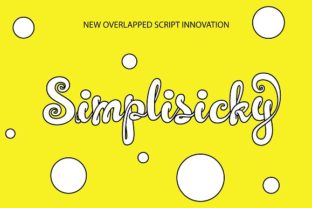
Embracing Simplisicky: The Art of Meaningful Minimalism in a Complex World
We live in a paradox of abundance. The average professional juggles a dozen software subscriptions, a hundred daily notifications, and an ever-growing to-do list. Yet, despite all this horsepower, a quiet frustration persists: why does everything feel harder than it should? Enter Simplisicky – a philosophy and practical approach that strips away the unnecessary without sacrificing capability. It is not about doing less for the sake of it. It is about designing workflows, products, and habits that feel lighter, clearer, and more intentional.
Simplisicky resonates deeply with a generation that has experienced the burnout of complexity. For creators, entrepreneurs, and knowledge workers, the term captures a long-overdue shift: from more features to better focus. Whether you run a small business, manage a team, or simply want your daily routine to feel less chaotic, understanding this mindset is becoming essential.
Why Simplisicky Matters Right Now
Current trends in technology and work culture point toward a reckoning with complexity. The era of accumulation – more apps, more tabs, more meetings – is giving way to a preference for curation. Users no longer celebrate a tool that does everything; they celebrate one that does the right thing seamlessly.
Simplisicky fits naturally into this landscape. It reflects a changing expectation: value is no longer measured by quantity but by clarity. Consider how many times you have opened a piece of software and felt overwhelmed before even starting. That friction is not a small annoyance – it is a barrier to getting good work done. Simplisicky proposes an alternative: design that respects your attention, processes that follow logic, and systems that fade into the background so your actual work can shine.
This shift is especially visible among freelancers and solo creators. Without the buffer of a large team, every wasted minute cuts directly into income and energy. A Simplisicky approach to project management or content planning, for instance, means spending less time managing tools and more time delivering value. It is not about laziness; it is about strategic reduction.
The Evolution from Complexity to Clarity
Ten years ago, the dominant narrative was about power. More features meant more capability, and the best tools were the ones that could do everything. But experience taught us a hard lesson: complexity often undermines usability. A dashboard with fifty options is only useful if you need all fifty, and most of us do not. We need five, and we need them to work flawlessly.
Simplisicky represents a maturing of that understanding. It acknowledges that professional-grade results do not require professional-grade chaos. The evolution has been gradual, driven by real-world pain points. Early adopters of minimalism in design – think of how writing apps moved from cluttered ribbons to clean, distraction-free interfaces – paved the way. Today, that sensibility has spread to entire workflows.
For marketers and bloggers, this means rethinking content strategies. Instead of producing ten average pieces a week, a Simplisicky mindset might focus on two deeply researched articles that genuinely help an audience. For business owners, it could translate to trimming product lines to focus on the offerings customers actually love and repeatedly buy. The shift is not about doing less work; it is about doing the right work with less resistance.
Practical Implications for Professionals and Creators
Adopting Simplisicky is not an abstract ideal. It has tangible, measurable effects on how you operate day-to-day. Let us look at some concrete scenarios.
For the Solopreneur or Freelancer
Your time is your most finite resource. If you spend thirty minutes each morning navigating a complex project management tool, that is thirty minutes you cannot bill. A Simplisicky approach would involve auditing your tool stack ruthlessly. Ask one question: Does this tool make my core work easier or does it add overhead?
I once worked with a freelance designer who used four different apps for scheduling, invoicing, file sharing, and communication. Each one was fine on its own, but the switching cost was draining. Consolidating into two integrated tools – and learning to use them well – cut his administrative time by nearly half. That is the practical payoff of Simplisicky: less tool management, more actual output.
For Marketers and Content Creators
Content creation has become alarmingly complex. Between editorial calendars, SEO tools, social media schedulers, and analytics dashboards, the act of writing often gets buried under the act of organizing. Simplisicky suggests a different rhythm: start with the message, then choose the simplest medium and distribution path that honors that message.
Take a blogger, for example. Instead of publishing across five platforms simultaneously and optimizing each post for different formats, a Simplisicky strategy might focus on a single platform where the audience is most engaged. You go deep there, build genuine connection, and repurpose only when it feels natural. The result is often better writing and stronger relationships – which, ironically, tends to outperform scatter-shot approaches in the long run.
For Teams and Small Businesses
In collaborative environments, complexity multiplies. A project that involves three people can easily accumulate fifteen email threads, two shared documents, and a chat history that no one has time to read. Simplisicky applied to teamwork means establishing clear, minimal communication protocols.
For instance, adopt a rule: any decision that affects the project is made in one place, at one agreed-upon time. Use a single document as the source of truth. Avoid creating new channels for every question. This sounds basic, but most teams violate it daily. The result is reduced friction, fewer misunderstandings, and a greater sense of shared progress. It is not about controlling people – it is about respecting their time by removing unnecessary loops.
How Simplisicky Aligns with Modern User Expectations
Audiences today are sophisticated. They have been bombarded by marketing noise for decades, and they have developed strong filters. What earns their attention today is genuine utility wrapped in ease. A product or service that requires a steep learning curve or a lengthy onboarding process is often abandoned before its value is even discovered.
Simplisicky speaks directly to this expectation. It prioritizes the user experience at every touchpoint. For a software developer, this might mean building an interface that anticipates what the user needs next, rather than presenting all options at once. For a service provider, it might mean simplifying the booking and delivery process so clients feel taken care of without having to ask how things work.
This alignment is not a coincidence. As daily life grows more saturated, people gravitate toward experiences that conserve cognitive energy. A checkout process that requires three clicks instead of six, a newsletter that sends weekly instead of daily, a reporting dashboard that shows only the metrics that matter – these are all small acts of respect. They signal that you understand your audience's constraints.
The Role of Trust and Authenticity
One of the quieter benefits of a Simplisicky approach is its effect on trust. When you offer something simple, clear, and honest, you are implicitly saying: I have nothing to hide, and I respect your time. That builds credibility faster than any volume of marketing copy.
Consider how you feel when you encounter a website that loads instantly, presents its value proposition in one sentence, and lets you sign up without a multi-step form. That feeling of relief is not accidental. It is the result of someone making deliberate choices to remove friction. In an environment where every competitor is shouting for attention, the simple approach often sounds the loudest.
For educators and coaches, this principle is especially powerful. A course or workshop that focuses on a few core concepts, taught with clarity and repetition, tends to produce better outcomes than one that covers everything and leaves learners confused. Simplisicky in education means mastery over exposure – a rare and valuable gift.
Realistic Recommendations for Getting Started
Moving toward Simplisicky does not require a dramatic overhaul. Small, intentional steps tend to stick better than grand reinventions. Here are some grounded actions you can take, regardless of your role.
Audit Your Daily Friction Points
Spend one week noting tasks that feel unnecessarily difficult or annoying. It could be a recurring report that takes too long to generate, a communication chain that loops in too many people, or a morning routine that starts with checking five separate news sources. Write them down. Then, for each one, ask: What is the simplest version of this task that still produces an acceptable outcome?
Often, the answer is surprisingly basic. The report may not need to include three graphs; one graph might suffice. The morning routine might be better served by a single curated newsletter. The communication chain could be shortened by making calendar invites more descriptive. These micro-adjustments compound.
Adopt a "Less But Better" Mindset
This phrase, borrowed from design thinking, is the heart of Simplisicky. When deciding what to include in a project, a product, or a schedule, weigh each element against a simple test: Does this add value that is noticeable and meaningful? If the answer is close to no, remove it. You can always add it back later if evidence supports it.
For a marketer, this might mean cutting the number of calls-to-action on a landing page from five to one. For a project manager, it could mean reducing the status update meeting from thirty minutes to ten, with stricter focus. The instinct to add is strong; the discipline to subtract is rare. Cultivate it.
Design for the Busy Day, Not the Quiet One
Most systems are built assuming ideal conditions – when you have time, energy, and focus. But real life is messy. A Simplisicky workflow acknowledges that you will sometimes work while tired, distracted, or under pressure. Design your processes to hold up under those conditions.
This means automating where possible, but also building tolerance for imperfection. A template that lets you fill in blanks quickly is better than a blank page. A checklist that covers the critical steps is better than a detailed manual you never read. Plan for the days when you have only twenty minutes, and everything else will feel like a bonus.
The Quiet Power of Restraint
Simplisicky is ultimately about restraint – the choice to leave things out so that what remains can truly matter. In a culture that often equates busyness with importance, this takes courage. But the results speak for themselves: less stress, better focus, and work that actually gets done.
Whether you are a creator trying to sustain a long career, an entrepreneur building a team, or simply someone who wants to feel less pulled in ten directions at once, the principles of Simplisicky offer a grounded way forward. It is not a magic bullet, and it does not promise overnight transformation. What it offers is a clearer path and a lighter load. That, in itself, is increasingly rare and increasingly valuable.